
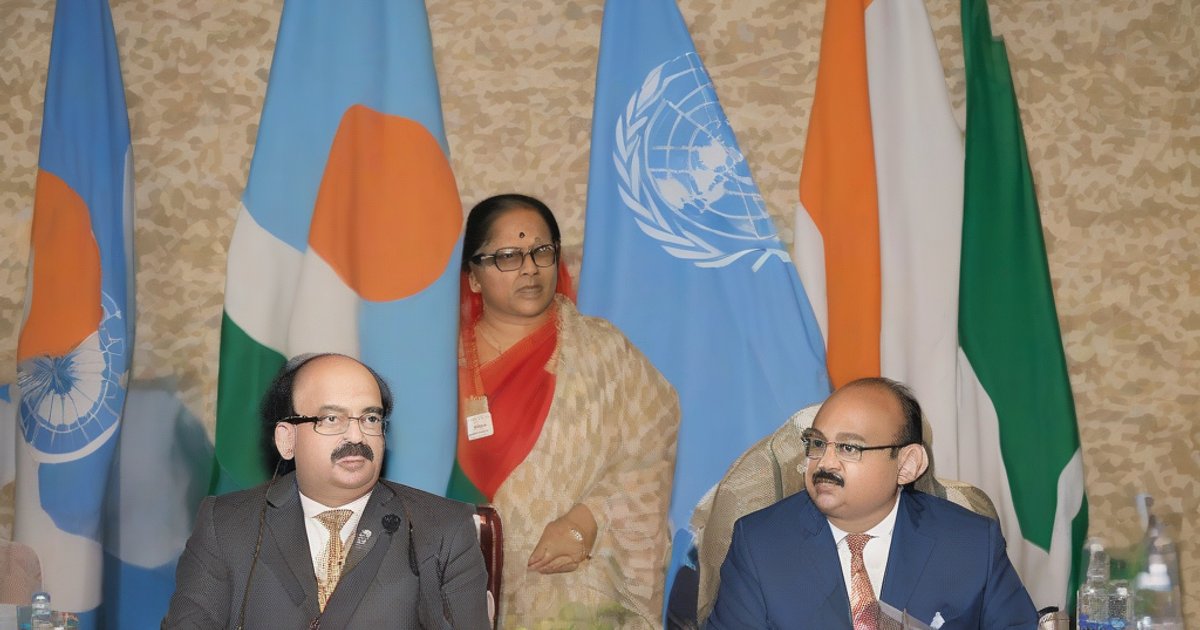
Shringla on Hasina Return: India-Bangladesh Ties Tested
Former Indian Foreign Secretary and current Rajya Sabha member Harsh Vardhan Shringla broke his silence on the politically sensitive subject of ousted former Bangladeshi Prime Minister Sheikh Hasina's potential return to her homeland during a public address at Adamas University in Barasat, North 24 Parganas. Speaking on September 9, 2026, Shringla characterized Hasina's extended stay in India as a humanitarian gesture rather than a political endorsement, emphasizing that New Delhi's decision to host the deposed leader was driven by immediate safety concerns following the dramatic student-led uprising that forced her resignation and flight on August 5. The veteran diplomat, who served as Foreign Secretary during critical phases of India-Bangladesh relations, underscored that the interim government led by Nobel laureate Muhammad Yunus now holds sovereign authority over any decision regarding Hasina's repatriation, including potential legal proceedings or political rehabilitation.
Shringla's remarks reflect India's delicate diplomatic recalibration in the wake of a neighborhood upheaval that caught South Block off guard. For fifteen years, Hasina's Awami League government served as India's most reliable regional partner, delivering on connectivity, counter-terrorism, and water-sharing agreements. Her sudden exit created a strategic vacuum, prompting New Delhi to engage cautiously with the new dispensation while managing domestic political pressures from both Bangladesh's opposition parties and India's own opposition, which has questioned the Modi government's perceived closeness to Hasina. The former Foreign Secretary's public intervention signals an attempt to frame India's role as principled and non-partisan, distancing the state from allegations of interference while preserving channels of communication with Dhaka.
Analysts note that Shringla's emphasis on humanitarian grounds serves a dual purpose: it provides legal and moral cover for India's hosting decision under international refugee norms, and it avoids prejudicing the interim government's domestic judicial processes. However, the silence on extradition requests or specific charges against Hasina leaves room for future friction. Bangladesh's interim administration has signaled intent to pursue accountability for alleged atrocities during the July-August crackdown, and any perceived Indian obstruction could strain bilateral trust. Meanwhile, Hasina's continued presence in India remains a potent political symbol for her supporters and a rallying point for her critics.
The broader implication is a reset in India's neighborhood policy, moving from personality-driven bilateralism to institution-based engagement. Shringla's articulation suggests New Delhi is preparing for a longer-term relationship with a Bangladesh that may chart a more independent foreign policy, including potential recalibration toward China. For now, India's strategy appears to be strategic patience — maintaining open lines with all stakeholders while avoiding commitments that could constrain future options.
Key Highlights
- Shringla frames Hasina's stay in India as humanitarian, not political endorsement
- Interim government under Yunus holds sovereign authority over repatriation decisions
- India recalibrates from personality-driven to institution-based neighborhood policy
- Potential friction looms if Bangladesh seeks extradition for alleged crackdown crimes
- New Delhi signals strategic patience amid Bangladesh's possible foreign policy shift
Source: Jagonews24.com
Read Full Article
Post a Comment